

A 20% glycolic acid peel does not perform the same way on Fitzpatrick I skin as it does on Fitzpatrick V. Yet many peel protocols are still built around acid strength and treatment level rather than the skin's actual barrier readiness. The result is excellent outcomes for some clients and preventable complications, particularly post-inflammatory hyperpigmentation (PIH), for others.
Personalizing chemical exfoliation means starting with skin type and barrier health, then choosing the acid or enzyme exfoliant that fits. Here's how to build protocols that hold up across every Fitzpatrick skin type, avoid the mistakes that put deeper skin tones at risk, and account for barrier support and seasonal change at every step.
Why One-Size-Fits-All Chemical Exfoliation Falls Short
Chemical exfoliation works by dissolving the bonds holding dead skin cells together, whether through acids, enzymes, or a combination of both, so they shed rather than build up on the surface. The mechanism is consistent. How skin tolerates it is not.
How Fitzpatrick Skin Type Changes the Risk Equation
The Fitzpatrick Scale exists precisely because skin's melanin content and UV response predict how it will react to stress, including chemical peels. Higher melanin activity in Fitzpatrick IV–VI skin means more reactive pigment-producing cells, which raises the risk of PIH when a peel is too strong, applied too soon, or layered onto an underprepared barrier. A protocol built for the "average" client, in practice usually calibrated to lighter skin tones, will underperform or misfire for a meaningful share of the clients walking into any treatment room.
Personalization Built Into the Treatment Menu
DermaQuest’s product range reflects this: resurfacers are formulated for use across all Fitzpatrick types, while more intensive self-neutralizing peels carry longer downtime and require more precise client selection. Personalization isn't an add-on step. It's the framework the entire treatment menu is built around.
Common Mistakes When Treating Fitzpatrick IV–VI
Fitzpatrick IV–VI skin is documented to be more prone to complications from chemical peels and laser treatments, including prolonged hyperpigmentation and scarring. Many of these complications come down to a handful of protocol gaps, not the acid choice itself:
- Treating peel strength as the only variable. A lower-percentage acid on an underprepared barrier can still cause PIH; readiness matters more than strength.
- Shortening the extended preconditioning window. Skipping ahead from four to six weeks down to two removes the barrier-building time Fitzpatrick IV–VI skin needs.
- Underestimating self-neutralizing peel downtime. These treatments carry 7–10 days of recovery, longer than resurfacers or non-self-neutralizing peels, and client expectations need to match that.
- Continuing retinoids or other actives too close to treatment. Standard retinol needs 14 days off beforehand, tazarotene needs 21, and a history of isotretinoin use requires a full year of clearance.
- Skipping the patch test after a treatment hiatus. Any client returning after six months or more away from peels should be patch tested again, regardless of skin type.
Choosing Between Acids and Enzyme Exfoliants
No single acid category is "correct" for a given Fitzpatrick type. The right choice depends on the client's primary concern, oil production, and how much barrier support has already been built in.
|
Category |
Works Well for |
Considerations |
|
Lactic & mandelic acids |
Sensitive skin, deeper Fitzpatrick tones |
Gentle exfoliation with humectant benefits; strong starting point |
|
Salicylic acid |
Oily, acne-prone skin |
Oil-soluble, helps clear congestion; self-neutralizing peels carry longer downtime |
|
Glycolic acid |
General brightening and texture |
Smaller molecule can penetrate faster; often warrants extra barrier prep for Fitzpatrick IV–VI |
|
Enzyme exfoliants |
Reactive or underprepared skin |
Lowest-risk entry point; useful before progressing to a full peel |
Here's how each category plays out in practice, starting with the gentlest option available across the Fitzpatrick range.
Lactic and Mandelic Acid: The Sensitive-Skin Standard
DermaQuest’s Lactic Acid Resurfacer combines 30% lactic acid with mandelic acid and niacinamide. It's formulated as a sensitive-skin resurfacer with minimal downtime, making it a dependable starting point across the Fitzpatrick range, particularly for clients who haven't been treated with chemical exfoliation before.
Salicylic Acid: Best Suited for Oily, Acne-Prone Skin
The Intelligent Jessner's Peel blends 14% salicylic acid, 14% lactic acid, and 14% resorcinol. It's barrier-friendlier and less aggressive than a traditional TCA peel. However, as a self-neutralizing formula, it carries a longer recovery window and is best suited for oily skin and clients who can accommodate 7–10 days of downtime.
Enzyme Exfoliants: A Lower-Risk Entry Point
The Mini Pumpkin Mask pairs enzymatic pumpkin pulp with 3% lactic acid and 4% mandelic acid to decongest pores and brighten tone with minimal irritation risk. For clients whose barrier isn't ready for a full peel, or as a bridge treatment between resurfacing sessions, it's a useful lower-risk option.
The Glycolic Acid Peel 30% is a solid option for clients seeking general brightening and texture improvement without a sensitivity concern. Because glycolic acid's smaller molecule penetrates faster, professionals often build in extra barrier preparation time before using it on deeper Fitzpatrick tones. These can carry more active melanocytes, which raise the risk of post-inflammatory hyperpigmentation if the skin becomes irritated.
Products Mentioned in Blog

Lactic Acid Resurfacer

Intelligent Jessner's Peel

Mini Pumpkin Mask

Glycolic Acid Peel 30%
Building Barrier Support and Adjusting for the Season
Every acid or enzyme choice above only performs as well as the barrier underneath it. This is where the DermaQuest Skin Health System™ becomes relevant:
Step 1, Strengthen, focuses on barrier health, and it has to happen before Step 2, Targeted Solutions like chemical exfoliation, can deliver reliable results.
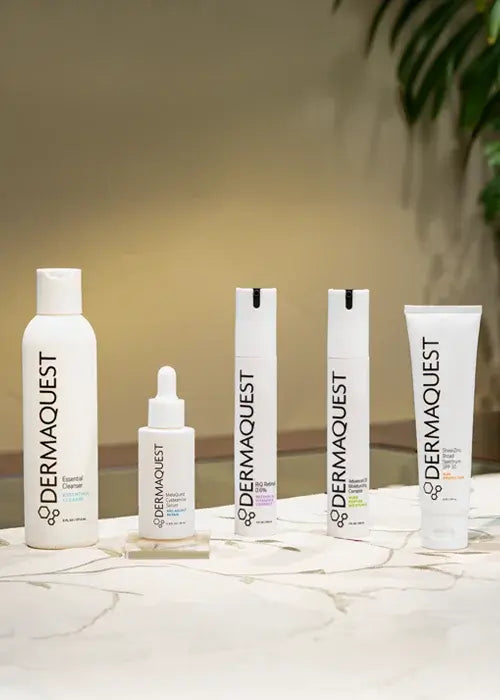
In practice, that means preconditioning with a non-stripping cleanser like Essential Cleanser, incorporating tyrosinase inhibitors such as Advanced MelaQuest Serum for Fitzpatrick IV–VI clients, and requiring daily SheerZinc Broad Spectrum SPF 30 throughout preconditioning and recovery. A hydrating serum can support the skin during both preconditioning and post-treatment healing.
Seasonal timing matters too. Sun exposure, humidity, and barrier hydration shift throughout the year, and a protocol calibrated for a drier winter barrier may be too aggressive once summer heat and UV exposure increase.
Pre- and Post-Peel Care That Protects Results
A personalized acid choice can still underperform without a matching prep and recovery timeline:
- 4–6 weeks before (Fitzpatrick IV–VI) or 2 weeks before (Fitzpatrick I–III): Begin barrier preconditioning, including tyrosinase inhibitors where indicated.
- 7 days before treatment: Discontinue retinoids, AHAs, BHAs, and benzoyl peroxide; avoid waxing or shaving the treatment area.
- 72 hours before treatment: Patch test, especially for clients returning after a six-month or longer hiatus.
- Isotretinoin history: Wait at least one full year after completing treatment before any chemical peel.
- After treatment: Reinforce daily SPF and hold off on reintroducing actives until the skin has fully recovered.
Clients notice when a protocol is built around their specific skin, not a generic treatment menu. That kind of precision is what turns a single peel into a repeat client and, over time, a referral.
Frequently Asked Questions
Ready to offer exfoliation protocols that hold up with confidence across every Fitzpatrick skin type your practice serves?