

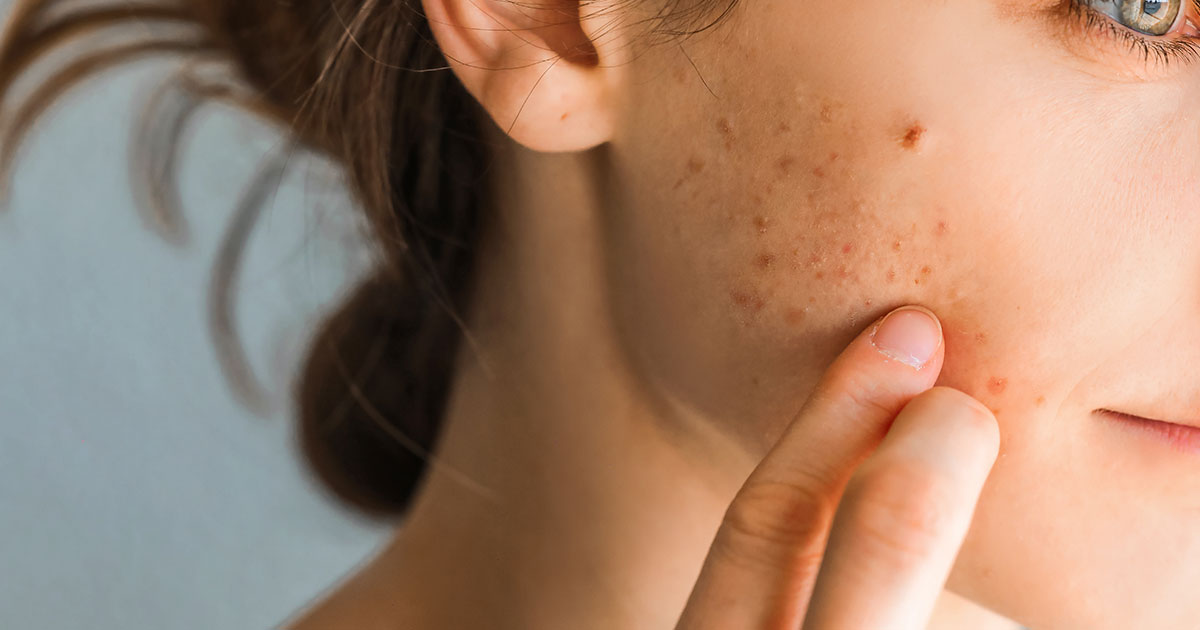
Post-acne skin rarely presents as one thing. A client may arrive with darkened marks, residual redness, and shallow depressions, and call it all "scarring."
The clinical reality is more layered. Those darkened marks and red patches are often post-inflammatory hyperpigmentation (PIH) and post-inflammatory erythema (PIE)—inflammatory responses, not structural damage—while the depressions are true atrophic scarring.
Each has distinct mechanisms, treatment pathways, and timelines for improvement. Accurately distinguishing between them is what separates a protocol that works from one that doesn't.
Not All Acne Scars Are the Same
When clients say "acne scars," they're often describing several distinct skin changes at once. Accurate classification is the first clinical step, and it determines everything that follows.
Atrophic Scars: Ice Pick, Boxcar, and Rolling
Atrophic scars result from tissue loss during the healing process. They present as depressions in the skin surface and are divided into three broad subtypes based on shape and depth:
- Ice pick scars are narrow, deep, sharply defined channels that extend into the dermis. They're among the most difficult to address and typically require procedures beyond the scope of topical treatments.
- Boxcar scars are wider, with defined vertical edges and flat bases. Shallow boxcar scars can respond to resurfacing; deeper ones are more resistant to topical and peel-based intervention.
- Rolling scars have sloping edges and a wave-like appearance caused by fibrous tissue tethering the dermis. They can appear more prominent under certain lighting and improve with treatments that stimulate collagen remodeling.
Understanding subtype depth is essential before recommending any resurfacing protocol.
Post-Inflammatory Hyperpigmentation (PIH) vs. Post-Inflammatory Erythema (PIE)
Post-inflammatory hyperpigmentation and post-inflammatory erythema are frequently mistaken for scars, but they're post-inflammatory responses, not structural damage.
- PIH is a flat, darkened discoloration caused by excess melanin production following inflammation. It's more pronounced in Fitzpatrick types III–VI and can persist for months without targeted intervention. Inflammation activates melanocytes, increasing melanin production. As the lesion heals, pigment remains in the epidermis or superficial dermis, leaving flat discoloration.
- PIE presents as pink or red flat marks and reflects vascular changes rather than pigment. It's more common in lighter Fitzpatrick types and tends to resolve on its own over time, though the timeline varies significantly.
Post-Acne Skin Changes at a Glance
|
Scar Type |
Appearance |
Mechanism |
Addressable with Topicals/Peels |
Notes |
|
Ice Pick |
Narrow, deep channels |
Tissue loss (dermal) |
No |
Typically requires referral-level intervention |
|
Boxcar |
Wide, defined edges, flat base |
Tissue loss (dermal) |
Shallow: yes / Deep: no |
Depth determines addressability |
|
Rolling |
Sloping edges, wave-like surface |
Fibrous tethering of dermis |
Limited |
Collagen-stimulating treatments improve appearance over time |
|
PIH |
Flat, darkened discoloration |
Excess melanin production post-inflammation |
Yes |
More pronounced in Fitzpatrick III–VI; requires tyrosinase inhibitor approach |
|
PIE |
Flat, pink/red marks |
Vascular changes post-inflammation |
Limited |
Does not respond to tyrosinase inhibitors; resolution timeline varies |
Why the Distinction Matters for Treatment Planning
Treating PIH with aggressive resurfacing without adequate preconditioning can worsen discoloration, particularly in darker skin tones.
Likewise, PIE does not respond to tyrosinase inhibitors; it requires vascular-targeted approaches. And true atrophic scars, especially ice pick and deep boxcar, will not resolve with topical chemistry alone.
Establishing this clarity with clients at the consultation stage sets realistic expectations and builds lasting trust in your clinical judgment.
What Topical Treatments Can and Can't Do
One of the most important conversations you'll have with acne scar clients is about scope. The right topical and professional peel protocols can produce meaningful improvement in post-acne discoloration, surface texture, and shallow atrophic scarring. They cannot restructure deep dermal tissue or fully resolve ice pick scars.
Scope of Topical and Professional Peel Interventions
Topical actives and professional peels operate primarily in the epidermis and superficial dermis. Within that range, they're effective tools. They can:
- Accelerate cell turnover to fade PIH and surface discoloration
- Stimulate collagen synthesis to improve shallow textural irregularities
- Reduce post-breakout congestion and refine pore appearance
- Suppress melanin production to prevent new discoloration
Deeper atrophic scars typically require referral-level interventions such as microneedling, laser resurfacing, subcision, or filler that fall outside the professional facial scope. Knowing when to refer is as important as knowing how to treat.
Setting Realistic Expectations with Clients
Clients who understand the mechanisms behind their skin changes are generally more invested in their protocols and more satisfied with the results.
Frame the conversation around what's addressable and in what timeframe. A client following a PIH barrier-first resurfacing protocol can see measurable improvement over a series of treatments. That outcome, communicated clearly at the outset, is what drives retention and referrals.
Best Ingredients for Acne Scars and Post-Acne Marks
Ingredient selection should map directly to what you're treating. The most effective protocols for post-acne skin combine exfoliating acids with brightening actives and repair-focused ingredients to address texture, discoloration, and barrier integrity simultaneously.
Exfoliating Acids (AHAs, BHAs)
Alpha hydroxy acids and beta hydroxy acids accelerate cell turnover, clear congestion, and improve surface texture. Salicylic acid (a BHA) penetrates the pore lining to reduce sebum and support a clearer, more refined texture. Glycolic and lactic acids (AHAs) resurface the epidermis, accelerating the natural fading of PIH and improving the appearance of shallow textural irregularities.
Mandelic acid, an AHA with a larger molecular structure, exfoliates more gradually, making it a strong option for clients with Fitzpatrick types IV–VI, where faster-acting acids carry a higher PIH risk.
Tyrosinase Inhibitors and Brightening Actives for PIH
For PIH, the treatment priority is suppressing melanin synthesis. Tyrosinase inhibitors interrupt the enzymatic pathway that drives melanin production, and the most effective protocols combine multiple inhibitors to address different steps in the cascade.
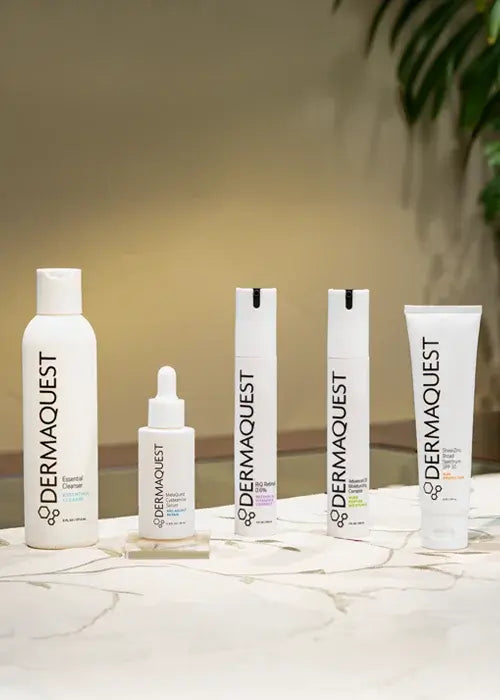
Advanced MelaQuest Serum combines arbutin, bakuchiol, and hexylresorcinol to target pigmentation through multiple pathways, making it a strong home care recommendation for clients managing PIH.
Peptides and Repair-Focused Actives for Barrier and Texture
Resurfacing inflamed or post-acne skin without supporting the barrier can undermine results. Peptides signal collagen synthesis, support the skin's natural repair processes, and help improve texture changes associated with shallow atrophic scarring over time. Advanced Stem Cell Rebuilding Complex supports this repair phase with copper peptides, Centella Asiatica, and plant stem cell actives that reinforce the barrier and support skin renewal.
Products Mentioned in Blog

Advanced MelaQuest Serum

Advanced Stem Cell Rebuilding Complex
Peels for Acne Scarring: Matching Treatment to Concern
Professional peels are among the most effective in-clinic tools for post-acne marks and surface texture. The key is matching peel type to the client's Fitzpatrick type, scar classification, and barrier status.
Superficial vs. Medium-Depth Peel Considerations
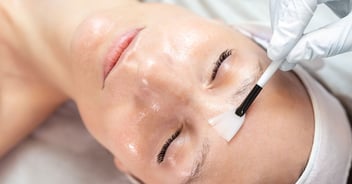
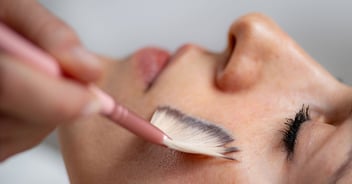
Superficial peels target the epidermis, accelerating turnover and fading discoloration. They're appropriate for PIH, PIE, and mild surface texture irregularities. Medium-depth peels reach the papillary dermis, making them more effective for shallow atrophic scarring and persistent discoloration. Still, they pose a higher risk for compromised or darker skin tones without proper preconditioning.
A series of treatments typically outperforms single sessions for post-acne concerns. However, the recommended number and frequency will vary based on scar type, Fitzpatrick type, barrier status, and your professional assessment of the client's response to treatment.
For a full overview of the peel journey from prep through recovery, see Chemical Peels: What to Expect Before, During, and After.
Selecting the Right Peel for Skin Type and Scar Classification
For acne-prone skin with congestion, comedones, and post-breakout marks, the Intelligent Jessner's Peel, formulated with 14% salicylic acid, 14% lactic acid, and 14% resorcinol, addresses multiple acne-related concerns simultaneously while resurfacing.
For clients with PIH or Fitzpatrick types III–VI, the Hibiscus Flower Mandelic Peel offers a gentler resurfacing option. Mandelic acid's larger molecular size means slower, more controlled penetration, reducing the risk of triggering additional post-inflammatory discoloration in reactive or darker skin tones.
Products Mentioned in Blog

Intelligent Jessner's Peel

Hibiscus Flower Mandelic Peel
Building a Protocol: Barrier Health as the Foundation
Effective acne scar treatment doesn't begin with the peel. It begins with the barrier. Acne-prone skin is frequently inflamed and compromised, so resurfacing without preparation increases sensitivity, prolongs recovery, and raises the risk of PIH, particularly in medium-to-deep skin tones.
Why Barrier Prep Matters Before Resurfacing
A strong, balanced barrier makes the skin more receptive to active ingredients and more resilient in recovery. For clients with post-acne skin changes, this means establishing barrier integrity before introducing resurfacing actives or scheduling professional peels.
For Fitzpatrick IV–VI clients, preconditioning with tyrosinase inhibitors up to six weeks before treatment is standard protocol, both to prepare the skin and to minimize post-peel PIH risk.
The DermaQuest Skin Health System™ provides the clinical framework for this approach: strengthening the barrier first, then layering targeted solutions for discoloration and texture, before advancing to resurfacing and protection. It's a progression that produces consistent, lasting results.
Home Care Sequencing for Between-Treatment Support
In-clinic treatments activate change; home care sustains it. Between appointments, clients need a regimen that supports the barrier, inhibits melanin production where appropriate, and includes daily mineral SPF. Sun exposure without protection can undo PIH progress regardless of what's happening in the treatment room.
Designing this take-home protocol is where your expertise as a skin health professional adds even more lasting value.
DermaQuest: Your Partner in Clinical and Business Success
Treating acne scars effectively requires more than the right products. It requires a partner invested in your success at every level. DermaQuest supports professionals with the clinical education, protocol guidance, and business resources needed to deliver consistent outcomes and build a thriving practice.
That means deep-dive training on ingredient science and treatment protocols, so your team stays current and confident. It means Fitzpatrick-inclusive formulations and a barrier-first clinical framework that give you the tools to treat every client walking through your door. And it means business development support, marketing resources, and pricing protection—because DermaQuest never undercuts its professional partners on product pricing.
The result is a partnership built around your long-term growth, not just your next order. Learn more in The DermaQuest Difference: Why Professionals Choose Us for Lasting Success.
Ready to elevate your acne scar treatment protocols? Contact the DermaQuest Team to learn how education, clinical support, and a proven partnership model can strengthen outcomes for your clients and your practice.
Learn More About Partnering With DermaQuest.