

A client sits down in your treatment room and says she wants "a peel." She's heard good things. Her intake form is incomplete.
You ask a few questions. Within two minutes, you know she's been on a prescription retinoid, had filler three weeks ago, and hasn't worn SPF consistently in months. The treatment she walked in requesting isn't the right one for her一not today, not without preparation.
This is professional chemical peel practice at its core: the consultation, the clinical read, the protocol decision. The outcome your client sees isn't determined by the peel alone. It's determined by everything that happens before and after it.
This guide covers the framework professionals use to make those decisions with confidence: peel categories, client assessment, contraindications, and post-care by treatment type.
Professional Chemical Peels and Resurfacers: How They Work and How to Use Them
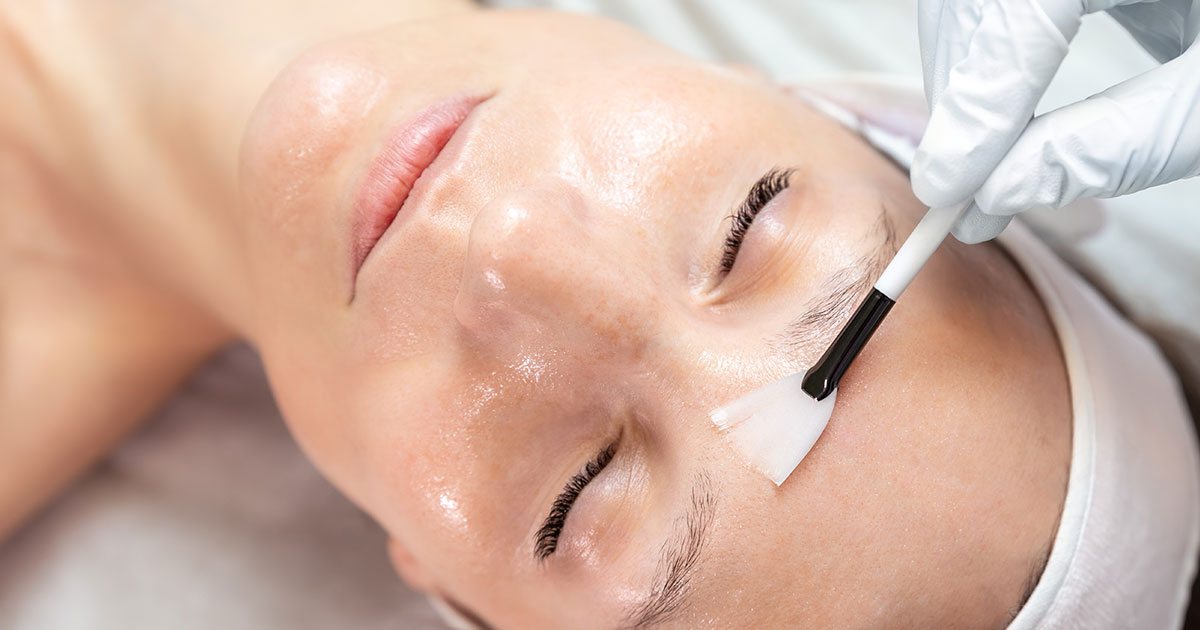
Chemical peels are professional exfoliation treatments that use acid solutions to accelerate cell turnover, stimulate renewal, and address a range of skin concerns, from acne and hyperpigmentation to fine lines and photodamage. They fall into two distinct categories: non-self-neutralizing and self-neutralizing, each designed for different skin conditions, tolerance levels, and treatment goals.
Resurfacers are a separate category of professional exfoliation treatment. They use enzymatic or mild acid activity to renew the skin's surface with less disruption than traditional chemical peels, making them an appropriate starting point for clients earlier in their treatment journey or working to restore barrier health before progressing to peels.
Understanding how each category works and what concerns it addresses is the foundation of confident treatment selection.
Non-Self-Neutralizing Peels: Precision and Customization
Non-self-neutralizing peels are time-dependent treatments. Depth is controlled by how long the peel remains on the skin before neutralization. This gives professionals the flexibility to adapt intensity in real time based on how the client's skin responds, making them well suited for clients who benefit from a more adjustable treatment experience. Expected downtime is one to three days. We recommend a series of six treatments every two weeks, followed by monthly maintenance.
Skin concerns addressed across this category:
- Dullness and loss of radiance
- Dark spots and uneven skin tone
- Fine lines and wrinkles
- Dryness and dehydration (select formulations)
- Loss of firmness (select formulations)
The Glycolic Acid Peel 30% targets brightening, texture refinement, and uneven tone, and is suitable for all Fitzpatrick types. The Power Peptide Peel is also for all Fitzpatrick types and addresses fine lines and visible loss of firmness, and pairs well with a firming enzyme treatment for immediate volume support in the same service.
Products Mentioned in Blog

Glycolic Acid Peel 30%

Power Peptide Peel
Self-Neutralizing Peels: Advanced Corrective Activity
Self-neutralizing peels are pass-dependent treatments; treatment depth increases with each layer applied, and the peel neutralizes automatically within the skin without requiring manual removal. These are advanced corrective treatments reserved for resilient skin requiring more intensive regenerative activity. Clients can expect seven to 10 days of visible peeling and regeneration. We recommend treatments every four weeks, with monthly maintenance following the initial series.
Skin concerns addressed across this category:
- Dark spots and uneven skin tone
- Acne, blemishes, and congestion
- Dullness and loss of radiance
- Fine lines and wrinkles
- Oily or combination skin
- Photodamage and advanced aging (select formulations)
The Salicylic Acid Peel delivers clarifying, antimicrobial action and is best suited for acne-prone and oily skin types. The Intelligent Jessner's Peel, formulated with 14% salicylic acid, 14% lactic acid, and 14% resorcinol enhanced with lilac stem cells, targets blemishes, discoloration, and fine lines in oily skin.
Resurfacers: The Foundational Starting Point
Resurfacers use enzymatic or mild acid activity to renew the skin's surface through controlled, time-dependent exfoliation. They deliver consistent improvement in clarity, texture, and radiance with minimal barrier disruption and zero to three days of mild shedding. We recommend treatments every two weeks in a series of six, followed by monthly maintenance.
For clients who are new to professional exfoliation, have a sensitized or compromised barrier, or are building toward chemical peels through a preparatory series, resurfacers can be an appropriate entry point. Once the skin has been conditioned, transitioning into chemical peels is a natural clinical progression. The Lactic Acid Resurfacer is a strong foundational option for professionals building that bridge.
Client Assessment: The Foundation of Every Peel Decision
Chemical peel selection follows assessment. A thorough intake enables you to match treatment intensity to the client's skin condition, tolerance, and goals before treatment begins.
Fitzpatrick Typing and Preconditioning Requirements
Peels can stress the skin and trigger melanocyte activity, increasing the risk of post-inflammatory hyperpigmentation (PIH). Because tyrosinase initiates melanin production, clients with Fitzpatrick types IV–VI must begin a preconditioning home care regimen with tyrosinase inhibitors up to six weeks before treatment to help regulate pigment response. Fitzpatrick types I–III generally begin preconditioning four weeks prior.
Contraindications Quick Reference
The following contraindications require modification, postponement, or declining treatment:
|
Contraindication |
How to Proceed |
|
Active cold sores or herpes |
Advise client of risks; peels can trigger outbreaks |
|
Pregnant or breastfeeding |
Do not treat |
|
Accutane use within the last 12 months |
Do not treat; minimum 12 months post-discontinuation |
|
Chemical peel, laser, or injectables within 2–4 weeks |
Do not treat; allow full healing |
|
Active eczema, psoriasis, or dermatitis |
Do not treat |
|
Autoimmune disorders (lupus, vitiligo, etc.) |
Provide advice potential risks; treat with caution |
|
Compromised immune system |
Provide advice on potential risks |
|
Skin cancer |
Treat only with physician’s permission |
|
Known ingredient allergy |
Avoid known allergens |
Patch Testing
A patch test should be done 24–72 hours before introducing any new treatment to a client's skin. It is also strongly recommended when a client returns after a six-month or longer hiatus, even if they have tolerated the peel previously.
Products Mentioned in Blog

Salicylic Acid Peel

Intelligent Jessner's Peel
Why Barrier Readiness Determines Your Outcomes
Professional chemical peels create a controlled disruption of the skin barrier to stimulate renewal. Because of this, the skin must be properly prepared before treatment. If the barrier is dehydrated, sensitized, or compromised, the client is more likely to experience irritation, uneven peeling, delayed healing, or inconsistent results.
To reduce these risks, clients should stop using AHAs, BHAs, retinoids, and other active ingredients seven days before their peel. They should also avoid excessive sun exposure and tanning beds in the weeks leading up to treatment.
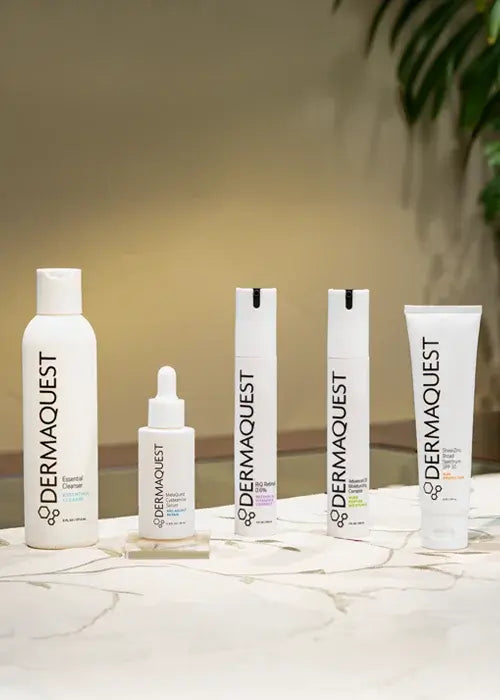
This is where the DermaQuest Skin Health System™ provides a practical framework for treatment planning. Its four-step structure: Skin Barrier Health; Targeted Solutions; Boost Skin Health; and Protect Skin Health, prioritizes barrier health before correction. This means preconditioning isn't just preparation, it's part of the treatment. Clients who arrive with a strong, balanced barrier respond more predictably, heal more efficiently, and build stronger cumulative results across a peel series.
For a complete look at how this approach supports treatment planning, see our blog, The Skin Health Foundation: A Smarter Approach for Skin Care Professionals.
Pre-Treatment Timelines
Pre-treatment preparation follows a structured timeline. Here's what that looks like in practice:
- Up to 6 weeks prior: Begin DermaQuest preconditioning regimen; introduce tyrosinase inhibitors for Fitzpatrick IV–VI
- 4 weeks prior: Complete any self-neutralizing peels in the current series; discontinue new professional treatments outside the prescribed regimen
- 14 days prior: Complete any resurfacer or non-self-neutralizing peels in the current series; avoid aggressive exfoliation, microneedling, or laser treatments
- 7 days prior: Discontinue all AHAs, BHAs, retinoids, and active ingredients
- 24–72 hours prior: Perform patch test
Products Mentioned in Blog

Lactic Acid Resurfacer
This lactic acid resurfacer safely and efficiently exfoliates skin while simultaneously providing hydration. A natural skin brightening agent, this peel helps provide visible improvements in the signs of skin discoloration. Skin is hydrated, smooth, and radiant.Post-Care by Peel Type
Post-care requirements differ between non-self-neutralizing and self-neutralizing chemical peels. Managing and communicating these correctly protects your clients and your outcomes.
Non-self-neutralizing peels (and resurfacers):
- No skincare products on the day of treatment
- No makeup for 24 hours; do not apply if the skin is actively shedding
- Avoid sweating, saunas, and hot showers for 24–48 hours
- Gradually reintroduce AHAs, BHAs, and retinoids at 7–10 days post-treatment
Self-neutralizing peels:
- No skincare products on the day of treatment
- No makeup for 48–72 hours; do not apply if the skin is actively peeling
- Avoid heat-inducing activities for 24–48 hours
- At 2–7 days: cleanse gently, keep skin hydrated, and apply broad-spectrum SPF daily. Use a calming cream as needed for redness or irritation. Follow your professional guidance for this phase
- At 7–10 days: resume regular skincare; gradually reintroduce actives; continue daily SPF
In both cases, clients should avoid picking or pulling at peeling skin. This is a primary cause of post-treatment PIH and scarring. Daily broad-spectrum SPF is non-negotiable throughout recovery and beyond.
For more detail on client recovery expectations, see Chemical Peels: What to Expect Before, During & After and How to Prepare Your Skin for Professional Treatments.
Planning a Chemical Peel Series
We recommend approaching professional chemical peels as a series rather than a one-time treatment. While a single peel can deliver visible improvement, cumulative results are typically achieved over multiple sessions.
For non-self-neutralizing peels, we recommend a series of six treatments performed every two weeks, followed by monthly maintenance. Self-neutralizing peels are recommended every four weeks, while advanced combination protocols may be spaced every six months based on skin tolerance and professional discretion.
To support consistent outcomes, professionals should document each session, monitor client tolerance, and adjust intensity progressively as the skin builds resilience.
The DermaQuest Difference: More Than a Product Line
Delivering consistent chemical peel outcomes takes more than the right formulations. It takes confidence in your protocols, fluency in the science, and the ability to communicate all of it clearly to your clients. That's where DermaQuest goes beyond the product.
Education That Goes Beyond the Treatment Room
For over 25 years, DermaQuest has operated on a straightforward principle: your success is our success. That means professionals who partner with DermaQuest gain access to comprehensive education, covering ingredient science, treatment planning, and the DermaQuest Skin Health System™一delivered through live training, virtual classes, and on-demand resources.
Business Support That Grows With Your Practice
It also means business support that extends beyond the treatment room. The DermaQuest Team works directly with professionals to develop business plans, identify growth opportunities, and provide the marketing and business development tools needed to strengthen client engagement. Because we never undercut our partners on pricing, you can build your practice with confidence, knowing your investment is protected.
The professionals who see the most consistent outcomes aren't just using the right products. They're supported by the right infrastructure, protocols they trust, education they can act on, and a partner invested in their long-term growth.
Ready to deliver consistent, confident chemical peel outcomes backed by comprehensive protocols, clinical education, and professional support? Contact the DermaQuest team to learn how our training programs and partnership resources support professionals at every level of their practice.