


You've been using sunscreen for years. But standing in front of the mirror, you're still not quite sure if you're applying enough, if your SPF 30 is actually doing its job, or whether any of this is making a real difference. You're not alone. Sunscreen is one of the most used一and most misunderstood一steps in any skin care routine.
Here are the answers to the questions people ask most about sunscreen, organized so you can find exactly what you need.
1. What Is Broad-Spectrum Sunscreen?
Broad-spectrum sunscreen protects against both types of ultraviolet radiation: UVA and UVB. A sunscreen that isn't labeled broad spectrum may only protect against UVB rays, which prevents sunburn but leaves deeper, aging-related damage largely unaddressed. In the U.S., broad spectrum is the FDA's standard designation for UVA and UVB coverage combined. Look for it on every sunscreen you use. (For more on how UVA and UVB rays differ, see #2 below.)
2. What's the Difference Between UVA and UVB Rays?
UVA rays penetrate deeply into the dermis, where they can drive collagen breakdown, hyperpigmentation, and the cumulative damage most people associate with premature aging. UVA rays are present year-round, including on cloudy days, and pass through glass一which means indoor exposure counts.
UVB rays cause sunburn. They affect the outer layers of skin and are most intense during peak sun hours.
According to the Skin Cancer Foundation, photoaging is responsible for the vast majority of visible changes to the skin. Much of that damage comes from UVA rays that operate silently and deeper than sunburn reaches.
3. What Does the SPF Number Mean?
A sunscreen’s Sun Protection Factor (SPF) measures how much UVB radiation a sunscreen filters relative to unprotected skin. Think of it as a ratio: SPF 30 means it would take 30 times longer for UVB rays to redden protected skin compared to unprotected skin.
In practice, the differences between SPF levels are smaller than the numbers suggest. According to the American Academy of Dermatology (AAD), SPF 30 blocks approximately 97% of UVB rays and SPF 50 blocks approximately 98%. That number reflects the strength of UVB filtration, not how long the sunscreen lasts. It also says nothing about UVA protection, which is why broad-spectrum coverage is essential.
4. SPF 30 vs. SPF 50: Which One Do You Actually Need?
For most daily use, SPF 30 applied correctly and consistently provides strong protection一and as noted above, the difference in UVB blockage between SPF 30 and SPF 50 is only about 1%. Broad-spectrum coverage, which addresses both UVA and UVB exposure, matters more than chasing a higher SPF number. (For more on how much sunscreen to apply, see #7 below.)
That said, SPF 50 earns its place in specific situations:
- At high altitudes, where a thinner atmosphere means less UV filtration before it reaches your skin
- During prolonged, active water exposure, where sunscreen degrades faster and reapplication isn't always immediate
- For skin prone to hyperpigmentation or already reactive, where the extra filtration reduces the UV trigger for pigmentation and inflammation
In fact, the Skin Cancer Foundation specifically recommends SPF 50 or higher for hiking or skiing at altitude and any extended outdoor activity.
Products Mentioned in Blog

SheerZinc Broad Spectrum SPF 30
With a unique blend of plant stem cells and antioxidants, this SPF rejuvenates the skin while providing best-in-class broad-spectrum UV protection. Elix-IR™ and InfraGuard are known to defend against blue light and infrared ray damage.5. What's the Difference Between Mineral and Chemical Sunscreen?
Mineral and chemical sunscreens both help protect skin from UV damage, but they work differently, and for sensitive or treatment-compromised skin, that difference can matter.
Mineral sunscreens use zinc oxide and titanium dioxide to create a physical shield against UV exposure. Because they sit on the skin's surface rather than relying on chemical absorption, they're generally considered the gentler option. Many dermatology and clinical skincare professionals prefer mineral protection, especially after treatments, because it's less likely to sting or trigger irritation.
Chemical sunscreens absorb UV energy and neutralize it before it can damage the skin. These formulas are sometimes lightweight with a transparent finish, but some people with sensitive skin may find certain chemical filters irritating.
Both types can be effective, but when skin health, sensitivity, and barrier support are the priority, mineral sunscreen is often the preferred choice.
|
Mineral Sunscreen |
Chemical Sunscreen |
|
|
How it works |
Creates a physical barrier against UV exposure |
Absorbs UV energy, and neutralizes it before skin damage occurs |
|
Key filters |
Zinc oxide, titanium dioxide |
Avobenzone, octinoxate, octisalate, others |
|
Skin compatibility |
Generally better tolerated by sensitive and reactive skin |
May irritate sensitive or post-treatment skin |
|
Texture |
Can feel richer, or in some cases, leave a slight white cast |
Typically lightweight and invisible on skin |
|
Best for |
Sensitive, post-treatment, acne-prone, or redness-prone skin |
Cosmetic preference and lightweight feel |
|
Additional benefits |
Zinc oxide also helps support and calm compromised skin |
Primarily focused on UV absorption |
|
Effective immediately? |
Yes |
Best applied about 15–20 minutes before sun exposure |
6. When Should You Wear Sunscreen?
Every morning, year-round, regardless of whether you plan to go outside.
UVA rays pass through windows, so indoor time near glass still means UV exposure. Overcast days don't eliminate UV either. According to the Johns Hopkins Bloomberg School of Public Health, up to 80% of the sun's UV rays penetrate cloud cover and reach the earth. Making sunscreen the last step of your morning routine removes the daily guesswork of deciding whether you "need" it. The answer is always yes.
7. How Much Sunscreen Is Enough?
SPF only works as labeled when you apply enough of it. For the face and neck, the standard recommendation is approximately ¼ teaspoon (about 1.25 mL), roughly the amount that fits along two fingers.
In reality, most people apply far less. Observational studies cited in a 2020 review published in the Canadian Medical Association Journal found that consumers typically use only 20 to 50 percent of the recommended amount, which significantly reduces real-world protection.
That means a high SPF applied too sparingly may not protect as well as a lower SPF applied generously and consistently.
Products Mentioned in Blog

SunArmor Broad Spectrum SPF 50

3D Tinted Moisturizing Broad Spectrum SPF 30
8. How Often Should You Reapply Sunscreen?
Reapply every two hours during outdoor activity, or immediately after swimming, towel drying, or sweating. Sunscreen breaks down with UV exposure, physical contact, and moisture, which means the protection from your morning application doesn't last all day.
For a typical indoor day with minimal outdoor exposure, morning application covers most people. Once you're spending time outside, reapplication is what makes protection continuous.
In short, when in doubt, applying slightly more is usually better than applying too little.
9. Does Sunscreen Expire?
Yes, and the expiration date is only part of the story. According to the U.S. Food & Drug Administration, sunscreen must maintain its original strength for at least three years, but that's a regulatory minimum, not a replacement schedule. Heat, direct sunlight, and repeated temperature changes can degrade a formula well before that date一which is why leaving sunscreen in a hot car or beach bag is a problem even with months to go before expiration.
Additionally, the AAD recommends replacing any sunscreen that shows visible changes in texture, color, or scent, regardless of the date on the packaging. A degraded formula creates a false sense of security: You apply it believing you're protected when the active ingredients may no longer be performing.
10. Can Makeup or Moisturizer with SPF Replace Sunscreen?
No. SPF in a moisturizer or foundation can contribute to your overall protection, but these products are rarely applied in the volume needed to deliver their labeled SPF. As mentioned, achieving the protection on the label requires approximately ¼ teaspoon of product on the face—far more than most people apply of a moisturizer or foundation.
If you're using a moisturizer or foundation, choose formulas that include SPF—even in smaller amounts, because every layer of protection counts. Apply in this order: moisturizer, then sunscreen, then makeup.
11. How Do You Know If Your Sunscreen Is Actually Working?
Consistent, correct application is the most reliable signal. If you're applying the right amount every morning, reapplying during outdoor exposure, and using a broad-spectrum formula suited to your skin type, your sunscreen is doing its job even when you can't feel it working.
Signs that your routine may need adjustment: you're burning despite wearing SPF, your skin is reacting to the formula, or you're noticing increased pigmentation over time. A licensed skincare professional can review your routine and confirm the right product and protocol for your skin.
12. How Do You Choose the Right Sunscreen for Your Skin Type?
Most people choose sunscreen based on SPF number alone. But formula matters just as much, and modern sun protection does more than block UV.
Blue light and infrared radiation from screens, indoor lighting, and the sun contribute to oxidative stress, collagen breakdown, and pigmentation over time. A formula built for your skin type, and formulated to address that broader spectrum of light exposure, provides a more complete daily defense.
Here's how to match your sunscreen to your skin.
- A strong daily option for most skin types: Mineral sunscreen with zinc oxide as the primary active is broadly well tolerated and particularly supportive for sensitive or post-treatment skin. Zinc's anti-inflammatory properties calm reactivity while delivering full broad-spectrum coverage. DermaQuest’s SheerZinc Broad Spectrum SPF 30 is formulated for daily use.
- Dry or mature skin: A richer mineral formulation that combines sun protection with hydrating and firming actives. SunArmor Broad Spectrum SPF 50 pairs zinc oxide and titanium dioxide with peptides that support the appearance of skin firmness and help soothe visible redness.
- Those who want coverage and SPF in one step: A tinted SPF with nourishing actives can simplify the routine without sacrificing protection. 3D Tinted Moisturizing Broad Spectrum SPF 30 provides broad spectrum coverage with a complexion-evening tint.
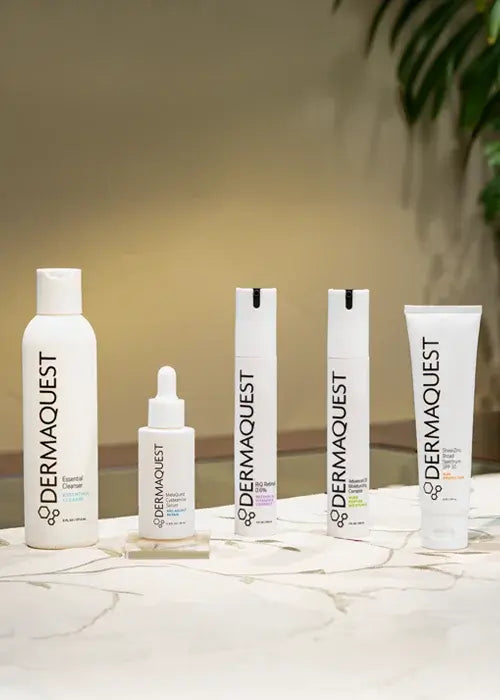
Sun protection is Step 4 of the DermaQuest Skin Health System™, the step that defends against daily environmental stressors, including UV rays, blue light, and infrared radiation.
When UV damage compromises the skin barrier, it undermines everything else your skin care routine is working to achieve. A licensed skincare professional can help you find the right formula for your skin and make sure your full routine is working together.
Ready to find the right sunscreen for your skin? Find a licensed DermaQuest skincare professional near you for personalized guidance on sun protection and your complete skin health routine.
Frequently Asked Questions
Find a DermaQuest Professional
Work with a licensed DermaQuest skincare professional to discover the ideal SPF and everyday sun protection regimen for your skin. Our experts can recommend high-performance formulas designed to help defend against UV damage while supporting healthier, more radiant skin.
All results are individual and may vary. This content is for educational purposes and does not replace professional medical advice. Always consult with a licensed skincare professional before beginning any new skincare regimen.