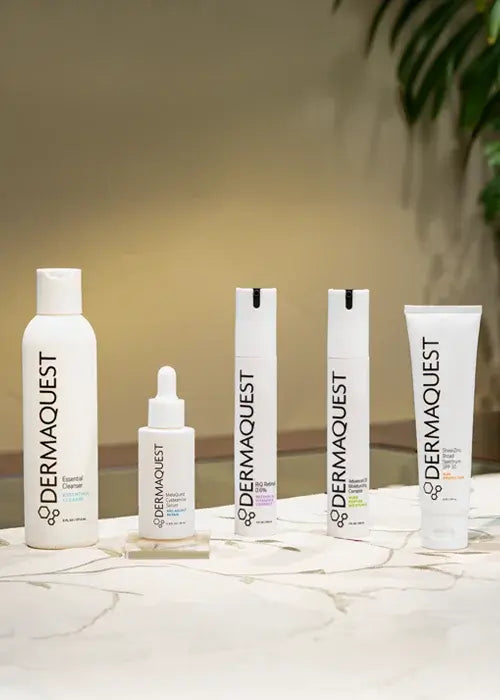



Believe it or not, most summer skin damage is self-inflicted. Not the sunburn kind, the quieter kind: washing more because you feel sweaty, exfoliating harder to chase a glow, layering on stronger actives when skin looks dull. Each habit weakens the skin barrier, and a weak barrier is what makes skin look older, showing up as tightness, dullness, and fine lines that maybe weren’t there in spring. And over-exfoliating is one of the fastest ways to erode your skin barrier, making skin more susceptible to visible signs of aging.
At DermaQuest, we treat these as one problem, not five, because they all age skin the same way: through the skin barrier.
Habit 1: Saving Sunscreen for Beach Days Only
Sunscreen tends to come out for the pool and the beach, then disappear the rest of the week. The problem is that UV exposure does not wait for a beach day. You collect it walking to the car, sitting near a window, and running errands, and that steady, low-level exposure is a major driver of premature aging over time. Daily broad-spectrum protection matters more than the SPF number you reach for on vacation, because SPF only measures UVB, the rays that burn, while broad-spectrum also blocks the UVA rays most linked to premature aging. Our guide, “Everything You Need to Know About Sunscreen,” breaks it down further.
How Much Sunscreen to Use on Your Face
Most people apply far too little, which quietly cuts the protection they think they are getting. For the face and neck, a good starting point is about a quarter teaspoon, or the length of sunscreen you can lay along two fingers. The same rule applies to tinted and mineral formulas. Spreading a thin layer to make it last simply lowers the protection.
How Often to Reapply Sunscreen
One morning application is not enough, because sunscreen wears down as the day goes on. Reapply at least every 2 hours during sun exposure, and always after swimming, sweating, or towel-drying.
Habit 2: Forgetting the Spots That Age First
Even careful sunscreen users tend to protect the center of the face and stop there. The areas people miss are often the ones that show photoaging earliest: the ears, the hairline, the sides and back of the neck, the chest, and the backs of the hands.
These spots absorb years of unprotected exposure and then reveal it through texture change, dark spots, and thinning skin. When you apply, extend past the face and cover every area the sun reaches. If dark spots have already set in, a brightening serum like Advanced MelaQuest Serum can help even them out alongside daily sun protection.
Products Mentioned in Blog

Advanced MelaQuest Serum

Essential Cleanser
Habit 3: Over-Cleansing Sweaty Summer Skin
Heat and sweat make skin feel grimy, so it is tempting to wash three or four times a day with something that leaves it squeaky clean. That squeaky feeling may be the problem. It means you have stripped the natural oils your skin barrier needs to retain moisture and defend itself, leaving skin tight, reactive, and more prone to the dullness you were trying to wash away.
Cleanse morning and night with a gentle, non-stripping formula, rinse with lukewarm rather than hot water, and let a quick splash of plain water handle midday sweat. A gentle daily cleanser that lifts sunscreen and sweat without disrupting the barrier is all summer skin needs.
Habit 4: Over-Exfoliating to Chase That Summer Glow
Summer dullness drives many people toward stronger, more frequent exfoliation. Daily acids, gritty scrubs, and layered treatments feel productive, but on skin already stressed by heat and sun, they do more harm than good.
Over-exfoliated skin is one of the most common and most preventable causes of skin barrier damage. There is no universal number, since the right frequency depends on your skin type and the exfoliant you use, but stressed summer skin almost always needs less than you think.
Signs of Over-Exfoliated Skin
Your skin will tell you when you have gone too far. Watch for:
- Tightness, stinging, or burning when you apply products
- Redness, flushing, or patches that feel raw
- A shiny, tight look that is easy to mistake for glow
- New sensitivity, breakouts, or flaking
If several of these sound familiar, your skin barrier needs recovery, not more product. Our guide, “The Signs of Over-Exfoliation and How to Fix It,” goes into greater depth.
How to Recover
Recovery starts with subtraction. Pause all acids, scrubs, and retinoids, and give your skin barrier a stretch of calm, hydrating care. A gentle cleanser for over-exfoliated skin paired with a soothing, barrier-supporting moisturizer like Delicate Essential Moisturizer helps skin rebuild. Reintroduce actives slowly, only once the tightness and redness have settled.
Habit 5: Relying on Sunscreen Alone
Sunscreen is essential, but it does not catch everything. UV exposure and heat generate free radicals that contribute to premature aging even when you are diligent with SPF.
A daytime antioxidant adds a second layer of defense. A vitamin C serum, such as Ferulic Infusion + C Serum, helps neutralize oxidative stress and supports a brighter, more even tone. It complements sunscreen; it does not replace it.
How to Reset a Summer-Stressed Skin Barrier
For all their differences, these five habits share one root: each strips or stresses the skin barrier, and a compromised barrier is what shows up as premature aging. That’s why the usual advice to buy five products for five problems misses the point. There is really one problem to solve.
This is the thinking behind the DermaQuest Professional Skin Health System™, a barrier-first framework that moves through four stages:
- Strengthen
- Target
- Boost
- Protect
For summer-stressed skin, two stages carry most of the weight: Strengthen, which rebuilds skin barrier health, and Protect, which defends it against daily UV and environmental stressors.
If your skin has been tight, reactive, or dull no matter what you try, your skin barrier may need more support than home care alone can provide. Our guide on the signs your skin barrier needs repair can help you tell.
Once your barrier feels calm again, “Your Complete Summer Skincare Routine” walks through the daily steps to keep it that way all season. If you want more hands-on support, a DermaQuest skincare professional near you can help you strengthen your skin barrier now and create a personalized plan to keep it healthy year-round.
Frequently Asked Questions
Ready to break the habits that may be aging your skin? Find a DermaQuest skincare professional near you to begin your skin health journey.