


Barrier compromise rarely announces itself clearly. A client presents with persistent sensitivity, products that stopped performing, or redness that doesn't resolve between appointments. Without a systematic framework for reading those signals, the instinct is to treat the surface concern. The result: slower visible improvement, increased reactivity, and a client whose confidence in the protocol begins to erode.
Understanding how to assess and address a compromised skin barrier isn't supplemental knowledge for a skincare professional, it's foundational. This guide covers how to identify barrier dysfunction, what causes it, what a structured repair approach looks like clinically, and how barrier health integrates into a progressive treatment system.
Why Barrier Health Is the Starting Point for Every Skin Concern
The skin barrier is the skin's first line of defense. When functioning well, it locks in moisture, prevents transepidermal water loss (TEWL), shields against irritants and environmental stressors, and supports immune response and inflammation regulation. These aren't independent functions; they operate as an integrated process, and a disruption in one area cascades across the others.
When the barrier is compromised, that breakdown becomes visible in the treatment room: moisture escapes faster than it can be replenished, irritants penetrate more easily, inflammation increases, and treatment efficacy decreases. The skin becomes reactive rather than responsive.
What "Compromised" Means Clinically
Compromised barrier function isn't simply dry skin. It's a structural condition in which the skin loses its ability to lock in moisture, regulate inflammation, and shield against irritants, the core functions the barrier is built to perform. Water content drops and permeability increases. The skin loses its capacity to defend, regulate, and repair itself.
This distinction matters clinically because it changes the treatment approach. Dry skin responds to hydration. Compromised barrier function requires lipid replenishment, inflammation control, and time. Adding actives before the barrier is stable typically worsens the condition.
Signs of a Compromised Skin Barrier
Assessing barrier health starts with pattern recognition. These are the indicators that, individually or in combination, point to barrier dysfunction rather than an isolated skin concern.
In the treatment room
- Generalized redness or diffuse inflammation not associated with active breakouts
- Skin that stings or burns when applying gentle, non-active products
- Flaking or rough texture that persists despite hydration
- Visible dehydration lines inconsistent with the client's skin type
- Heightened sensitivity to temperature, pressure, or fabric contact
Client-reported
- Products that previously felt comfortable now cause stinging or reactivity
- Moisturizer that no longer provides lasting relief
- Skin that feels tight throughout the day, even after product application
- New sensitivities develop across multiple product categories
Reading Reactivity vs. Sensitivity
A useful clinical distinction: reactive skin responds to a specific trigger, then recovers, whereas barrier-compromised skin operates with a chronically lowered tolerance threshold. It’s continuously reactive and often requires extended recovery.
According to the Journal of Drugs in Dermatology, disruption of the epidermal barrier leads to skin that is persistently more irritated and more sensitive than normal. Clients may describe it as their skin "turning against them," reacting to products they've used for years or to environmental factors they previously tolerated without issue.
For a deeper look at these indicators, see 5 signs your skin barrier needs repair.
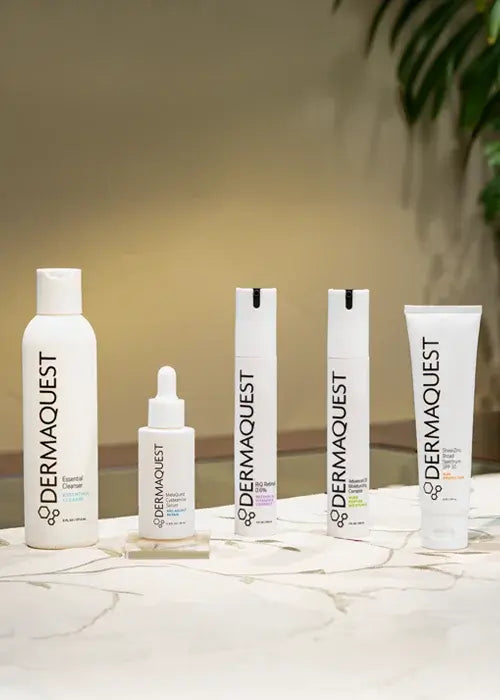
Products Mentioned in Blog

Essential Cleanser

B5 Hydrating Serum

Advanced Stem Cell Rebuilding Complex

Soothing Antioxidant Complex

SheerZinc Broad Spectrum SPF 30 PRO
Common Causes of Barrier Compromise
Understanding causation is critical to building a repair plan that holds. Without addressing the contributing factor, the barrier can’t stabilize.
Over-Exfoliation
Over-exfoliation is among the most common contributors. Daily use of AHAs, BHAs, or physical exfoliants, or layering multiple actives without professional guidance, can strip the protective fats and proteins that hold the barrier together faster than the skin can rebuild them.
Compressed Professional Treatment Timing
Professional treatments scheduled too closely together can push the barrier past its recovery threshold. For a closer look at how to recognize and address this pattern, see Signs of Over-Exfoliation and How to Fix It.
Environmental Factors
Environmental factors including UV exposure, pollution, extreme temperature, and low humidity may increase TEWL and accelerate lipid depletion. Chronically stressed skin from climate, lifestyle, or systemic inflammation may also become more vulnerable to barrier breakdown.
Inappropriate Product Use
Inappropriate product use is another common cause. Harsh surfactants, high-fragrance formulations, and alcohol-based products disrupt the barrier's lipid balance and pH. Clients self-prescribing active-heavy routines based on a quick internet search rather than professional guidance can present with unrecognized barrier compromise underlying their primary concern.
How to Approach Skin Barrier Repair
Effective repair follows a clinical sequence. The DermaQuest Skin Health System™ identifies four actions for treating barrier-impaired skin: stabilize, restore, rehydrate, and protect. Each stage addresses a distinct aspect of barrier dysfunction and creates the conditions for the next.
Stabilize
Eliminate factors actively compromising the barrier. Pause over-exfoliation, discontinue harsh actives, and reduce environmental exposure where possible. Calming active inflammation prevents ongoing damage and enables repair to begin.
Restore the Lipid Matrix
Research suggests that ceramides, cholesterol, and essential fatty acids form the lamellar membranes of the stratum corneum一collectively known as the lipid matrix一that limit moisture loss and protect against external stressors. Replenishing these lipid components rebuilds the barrier's structural foundation, reducing TEWL and restoring the skin's capacity to protect and repair itself.
Rehydrate and Support Recovery
Humectants draw water into the skin and improve cellular repair. Hydration supports enzyme activity within the barrier, which is required for regeneration.
Protect Against Further Damage
Photoprotection and antioxidant support prevent UV and environmental damage from undoing the repair work. This stage is ongoing; barrier integrity, once restored, requires consistent defense.
Key Ingredient Categories in a Repair Protocol
Effective barrier repair requires ingredients that address hydration, lipid replenishment, and active calming. Core categories include:
- Hyaluronic acid—binds moisture in the extracellular matrix, reduces TEWL, supports hydration and resilience
- Panthenol (Provitamin B5)—reduces TEWL, supports lipid synthesis, calms irritation and sensitivity
- Niacinamide (Vitamin B3)—reinforces barrier lipid synthesis, improves hydration retention, reduces redness
- Centella Asiatica (Gotu Kola)—stimulates collagen synthesis, calms inflammation, strengthens the barrier
- AcquaCell™—regulates aquaporin channels to optimize cellular water balance beyond surface moisture
The full DermaQuest barrier restoration ingredient system:
|
Ingredient |
Primary Action |
Barrier Benefit |
|
Hyaluronic acid |
Humectant |
Binds moisture in the extracellular matrix; reduces TEWL; supports hydration, elasticity, and resilience |
|
Panthenol (Provitamin B5) |
Lipid synthesis |
Reduces TEWL; supports lipid synthesis; calms irritation, redness, and sensitivity |
|
Amino acids (NMF) |
Water retention |
Attract and retain water in the stratum corneum; support barrier integrity and cellular repair |
|
AcquaCell™ |
Osmoprotective hydration |
Regulates aquaporin channels to optimize cellular water balance; supports resilience beyond surface moisture |
|
Niacinamide (Vitamin B3) |
Barrier lipid synthesis |
Improves hydration retention and resilience; anti-inflammatory; reduces redness |
|
Centella Asiatica (Gotu Kola) |
Repair & calming |
Stimulates collagen synthesis; calms inflammation; improves hydration; strengthens the barrier |
|
Plant oils & butters |
Lipid replenishment |
Supply essential fatty acids and sterols; reinforce the stratum corneum; restore lipid balance |
|
Buddleja Davidii (Summer Lilac) |
Anti-inflammatory |
Calms redness; supports wound repair; phytosterols and amino acids support hydration and barrier function |
Aligning Home Care With in-Clinic Protocols
Barrier repair gains significant ground between appointments when home care follows the same principles as in-clinic treatment. A simplified, barrier-supportive routine— gentle cleanser, hydrating B5 serum, soothing barrier serum lipid-replenishing moisturizer, and SPF—can maintain and extend the results from in-clinic visits to prevent recurrence from the common causes discussed above.
Prescribing home care that follows the same barrier-first sequence reinforces the professional relationship as well. Clients who understand the rationale for their routine—and see that rationale play out in their results—stay engaged with the protocol.
These DermaQuest products put the core ingredient categories into practice:
|
Product |
Key Actives |
Primary Use |
|
CLEANSE |
Aloe Barbadensis Leaf Juice, Grape Seed Extract, Pineapple & Papaya Enzymes |
Daily gentle cleansing, barrier prep, surface exfoliation |
|
HYDRATE |
Dual-weight HA, Panthenol |
Layered hydration, barrier support |
|
REPAIR |
Centella Asiatica, Edelweiss Cell Culture, Copper Lysinate/Prolinate |
Recovery in reactive or compromised skin |
|
REPAIR |
AcquaCell™, Artemisia Vulgaris (Mugwort), Centella Asiatica |
Visible redness, heightened sensitivity |
|
PROTECT |
Zinc Oxide 18.6%, Arabidopsis Thaliana Extract, THD Ascorbate, InfraGuard |
Daily broad-spectrum UVA/UVB + blue light + infrared defense; post-treatment skin protection |
Building a Barrier-First Practice Framework
Focusing on barrier repair and Skin Barrier Health isn't a detour from the client's skin health goals. It's the first step in achieving them. When the barrier is compromised, even the most precisely selected actives work harder and deliver less. Once the barrier is stable, every subsequent treatment and product can perform at a higher level.
That's the foundational logic behind Step 1 of the DermaQuest Skin Health System™, and why barrier health is the prerequisite for every step that follows. The system builds on itself: strengthen the barrier first, then layer targeted correction, boost skin health, and defend with broad-spectrum protection.
The DermaQuest Partnership Advantage
A barrier-first framework is only as effective as the professional delivering it. DermaQuest supports that delivery through comprehensive education on ingredient science and treatment protocols, business development resources, and a partnership model built around your practice's long-term success—not just product access.
To learn more about the full scope of education, business support, and partnership resources available, check out The DermaQuest Difference: Why Professionals Choose Us for Lasting Success.
Ready to support your clients' skin health with a structured, barrier-first approach? Contact the DermaQuest team to learn how comprehensive education, professional-grade formulations, and the DermaQuest Skin Health System™ can elevate clinical outcomes across your practice.