

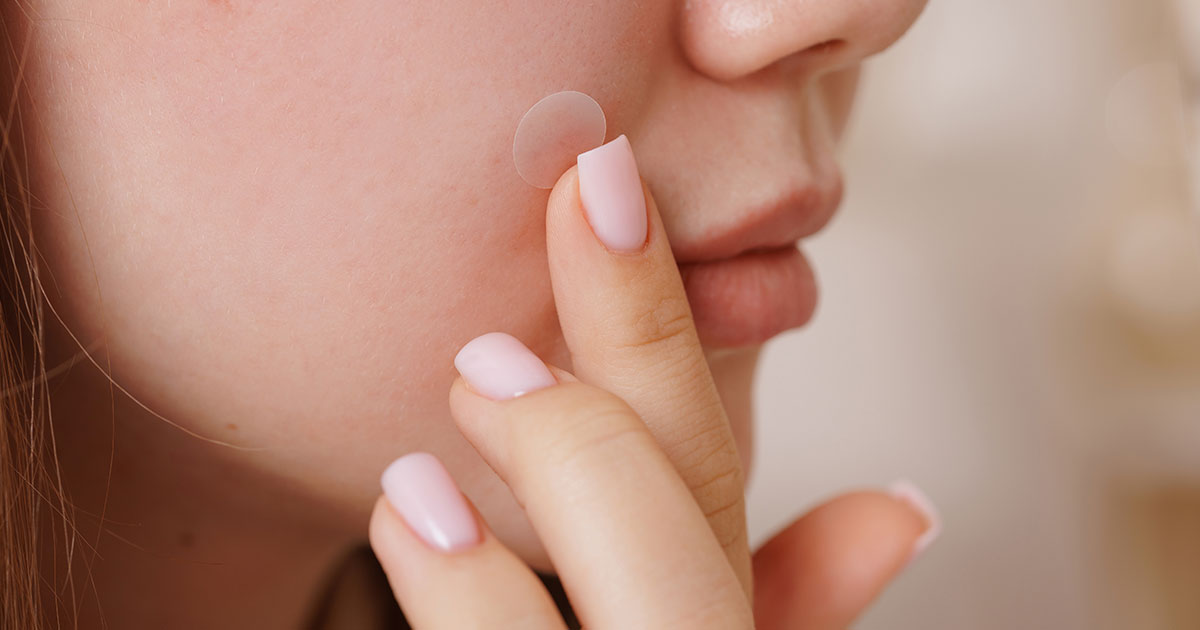
A client settles into your treatment chair and mentions she's been using pimple patches every night. She saw them on social media, grabbed a pack, and wants to know if she should keep using them. It's a routine moment, but also an opportunity. How you answer shapes her understanding of her skin, her trust in your expertise, and whether she sees what you do as meaningfully different from what she can buy at a drugstore.
This piece gives you the clinical grounding and conversation framework to answer that question well. Here's what to know and what to recommend.
How Do Pimple Patches Work? The Clinical Picture
Redirecting a client's expectations starts with understanding what patches do well, and where they fall short.
Most pimple patches are made with hydrocolloid, a material originally developed for wound care. When placed over an open, superficial acne lesion, a hydrocolloid patch absorbs surface fluid and exudate from the blemish while creating a moist, occlusive environment that supports the skin's natural healing process. The patch also acts as a physical barrier, discouraging picking or touching.
When Patches Have an Effect
Hydrocolloid patches are most effective on pustules and whiteheads, superficial lesions with a visible head where fluid is close to the surface. In these cases, the patch can help reduce visible size and redness overnight by drawing out fluid and shielding the lesion from external irritation.
For clients managing occasional, isolated surface breakouts, a patch can be a reasonable tool between professional appointments. The key word is tool, not treatment plan.
When They Don't and Why
The mechanism falls short for deeper acne types. Papules sit closer to the surface, but nodules and cyst‑type lesions start deeper in the dermis, where patches can’t effectively reach. A patch placed over a cystic lesion sits on top of intact skin with nothing to absorb. There's no open lesion, no accessible fluid, and no mechanism for the hydrocolloid to act on. Clients who report that patches "don't work" on their acne are often dealing with exactly this scenario.
Patches also don’t address closed comedones, congested pores, excess sebum production, or the inflammatory environment that drives recurring breakouts. They respond to symptoms, not causes.
Do Pimple Patches Work on Cystic Acne? What to Tell Your Clients
This is the question most likely to come up—and it has a clear answer. No, pimple patches are not effective for cystic or nodular acne. The lesion is too deep and the skin surface is intact, giving the hydrocolloid nothing to work with.
Why Cystic Acne Responds Differently
Cystic acne develops when a follicle becomes clogged with oil, dead skin cells, and bacteria, and the resulting inflammatory response extends into the dermis to form a deep, painful cyst‑like nodule.
Because the lesion is enclosed beneath the skin's surface, topical applications alone, including patches, cannot penetrate to the site of the problem. This is precisely why cystic and inflammatory acne often requires professional-level intervention rather than just OTC management.
What Actually Works for Deeper Breakouts
Professional treatment for cystic and inflammatory acne involves approaches that work at the level where the problem originates. Chemical peels with salicylic acid, for instance, penetrate into the follicle to reduce congestion and target the environment that drives breakouts. Our Salicylic Acid Peel and Intelligent Jessner's Peel are professional-use options that address inflammatory acne, reduce congestion, and work at the follicular level, well beyond what any surface-applied patch can reach.
Products Mentioned in Blog

Salicylic Acid Peel

Intelligent Jessner's Peel
What Patches Miss: The Bigger Picture for Your Practice
Even when patches work as intended, they address only the lesion in front of them. Managing what's underneath: the congestion, barrier disruption, and sebum patterns that drive recurring breakouts, is precisely the value you bring as a skilled skincare professional.
Barrier Health and the Acne Connection
A compromised skin barrier increases vulnerability to inflammation and disrupts the skin's microbiome balance, both of which contribute to acne-prone conditions. Clients who are over-cleansing, over-exfoliating, or using harsh OTC products alongside their patches may be actively worsening the environment their breakouts thrive in.
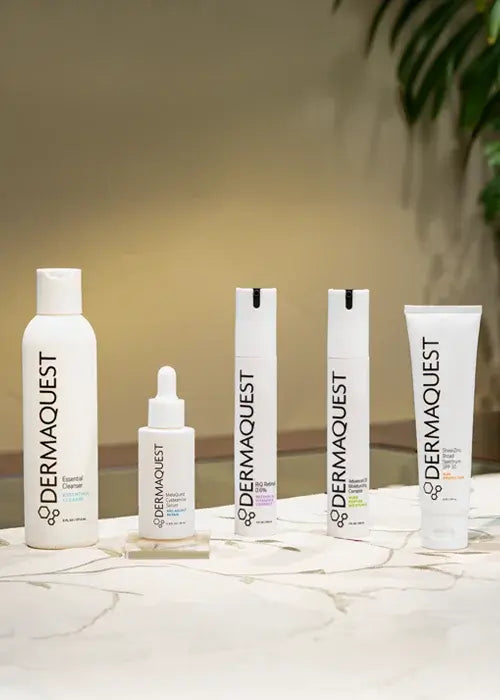
As part of the DermaQuest Skin Health System™, establishing barrier health before targeting acne is central to how effective professional treatment can be. A balanced, resilient barrier makes skin more receptive to active ingredients, reduces inflammatory response, and creates the stable foundation that targeted acne protocols need to perform at their best.
For your clients, that can mean fewer setbacks between appointments and more consistent, visible progress over time.
Sebum, Congestion, and the Full Picture
Effective acne management also requires regulating sebum production, clearing congested pores, and addressing post-breakout discoloration. None of these are within the scope of a pimple patch.
A professional assessment can get to the root of what's driving a client's breakouts and builds a protocol around that finding. That level of personalization is what DermaQuest equips professionals to deliver—and what separates professional skin care broadly, in part, from anything available over the counter.
Turning the Patch Question Into a Practice-Building Conversation
A client who asks about pimple patches is telling you something valuable: they're engaged, curious, and looking to you for guidance. How you respond shapes not just that conversation, but the relationship that follows.
A Framework for Redirecting Without Dismissing
The most effective approach acknowledges what patches can do before explaining what they can't. Dismissing a product a client already trusts can feel like a correction rather than a collaboration. Instead, consider a response along these lines:
"Patches can be useful for a surface breakout when you catch it early. Where they run into limitations is with deeper or recurring acne. That's where professional treatment can actually reach the root of what's happening."
This validates their intuition while opening the door to a more thorough conversation about what their skin actually needs. It positions you as an educator, not a skeptic.
Products Mentioned in Blog

BHA Spot Treatment

Universal Clarifying Pads
How Client Education Builds Long-Term Trust
Clients who understand the why behind their treatment plan are more committed to it. When you explain that their acne is driven by congestion or barrier disruption—not just a surface blemish—they understand why a patch isn't the full answer, and why their professional appointments matter. That understanding often translates into retention, home care compliance, and referrals.
At-Home Care That Goes Beyond the Patch
For ongoing at-home maintenance between professional appointments, two products give clients a meaningful step up from general acne care.
The BHA Spot Treatment delivers 2% salicylic acid directly to active breakouts via a hygienic applicator, targeting the follicle to help reduce the appearance of existing lesions and unclog congested pores. Where a hydrocolloid patch sits on top of the skin waiting for fluid to surface, salicylic acid works within the pore, making it more effective across a broader range of acne types.
The Universal Clarifying Pads take a broader approach, combining lactic acid, salicylic acid, kojic acid, and mandelic acid to exfoliate, reduce congestion, and address post-breakout discoloration twice weekly. Rather than responding to a single lesion after it appears, the pads work proactively to maintain the skin environment that keeps breakouts from forming in the first place.
Together, they give clients a professional-grade home care option that addresses both active breakouts and the conditions driving them. In short, they give you something concrete to recommend when the patch conversation comes up.
Ready to strengthen your acne protocols and give your clients more than a surface-level solution? Contact the DermaQuest team to learn how comprehensive education, professional-grade treatment options, and a true partnership model can elevate your clinical outcomes.