

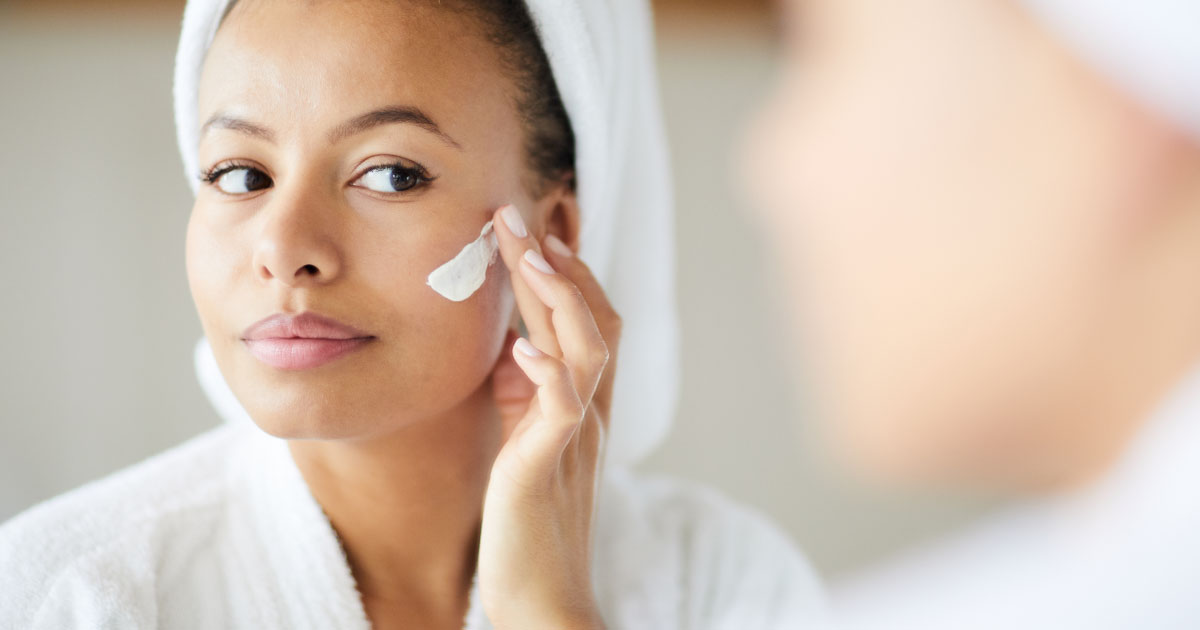
A client sits down in your treatment chair and tells you they haven't exfoliated in years. Their last skincare professional told them sensitive skin can't handle it. Their skin looks dull, has some congestion in the T-zone, and they've been managing it with the most minimal routine they can tolerate, because that's what they were told to do.
This scenario is familiar. And the caution behind it is well-intentioned. But "never exfoliate sensitive skin" is an overcorrection that leaves real results on the table. The question isn't whether sensitive skin can be exfoliated, it's how.
This guide covers how to identify sensitive skin, why the distinction between sensitive and sensitized skin matters for protocol design, and how to approach exfoliation in a way that delivers visible improvement without compromising barrier integrity.
What Is Sensitive Skin?
A systematic review and meta-analysis published in the Journal of the European Academy of Dermatology and Venereology found that roughly 7 in 10 adults report having sensitive skin to some degree. Despite this high prevalence, sensitive skin remains one of the most misunderstood concerns in clinical practice. For skincare professionals, a clear working definition is the foundation of effective protocol selection.
According to the Cleveland Clinic, sensitive skin refers to heightened cutaneous reactivity, often marked by burning, stinging, itching, or dryness even when visible signs are minimal.
This distinguishes it from inflammatory conditions like rosacea and contact dermatitis, which present with clearer clinical features, such as persistent redness, visible vessels, rash, or blistering. This reactivity often reflects a skin barrier that is thinner, more permeable, or less able to regulate the inflammatory response than average.
Sensitive Vs. Sensitized: An Important Distinction
Sensitive skin is an intrinsic skin type, typically present since adolescence or early adulthood. Sensitized skin is different. It's a condition, a state of acquired reactivity triggered by external factors such as over-exfoliation, harsh products, or environmental stressors.
This distinction matters for protocol design. Sensitized skin often resolves once the trigger is removed and the barrier is restored. Genuinely sensitive skin requires a consistently gentle, barrier-supportive approach across all treatments and home care.
How to Identify Sensitive Skin in Your Clients
During the consultation process, listen for these signs that point toward a sensitive skin type:
- Redness or flushing in quick response to heat, friction, or products
- A history of reactions to products labeled for general use
- Ongoing stinging, burning, or tightness—not just after exfoliation
- Reports that their skin "doesn't like" most actives or treatments, going back years
A thorough intake history, including what products they've used, what has caused reactions, and how long they've experienced sensitivity, helps distinguish between a skin type and a barrier in temporary distress. Once that determination is made, the protocol question becomes clearer: not whether to exfoliate, but how.
Products Mentioned in Blog

Advanced Stem Cell Rebuilding Complex

Delicate Essential Moisturizer
Can Sensitive Skin Be Exfoliated?
The short answer is ‘yes.’ Sensitive skin still undergoes normal cell turnover, and when dead cell buildup accumulates, it dulls appearance, congests pores, and can actually impair barrier function by preventing the skin's natural desquamation from completing properly.
The risk isn't exfoliation itself, it's exfoliation without the right approach. Over-exfoliation is one of the most common causes of barrier disruption, and for reactive skin types, the consequences compound quickly. The solution to that risk is precision, not permanent avoidance.
What Makes an Exfoliator Appropriate for Sensitive Skin?
Sensitive and sensitized skin can still benefit from physical exfoliation. The key is choosing products specifically formulated for reactive skin types and using them with care. Unlike harsh, abrasive scrubs, gentle physical exfoliants designed for sensitive skin use finer, skin-compatible particles that work with the barrier rather than against it.
For chemical exfoliants, ingredient selection matters significantly:
- Larger-molecule acids: Research confirms that lactic acid has a larger molecular size than glycolic acid, which limits penetration depth and generally makes it better tolerated by reactive skin types.
- Barrier-supportive co-ingredients: Niacinamide alongside an exfoliant helps support barrier function during the resurfacing process.
- No fragrance or sensitizers: Even a well-formulated exfoliant can trigger reactivity if it contains common sensitizers like fragrance, essential oils, or alcohol.
Building a Sensitive Skin Protocol
For sensitive skin, exfoliation is one part of a barrier-supportive protocol. How you prepare the skin and support it afterward determines whether clients see results or reactivity.
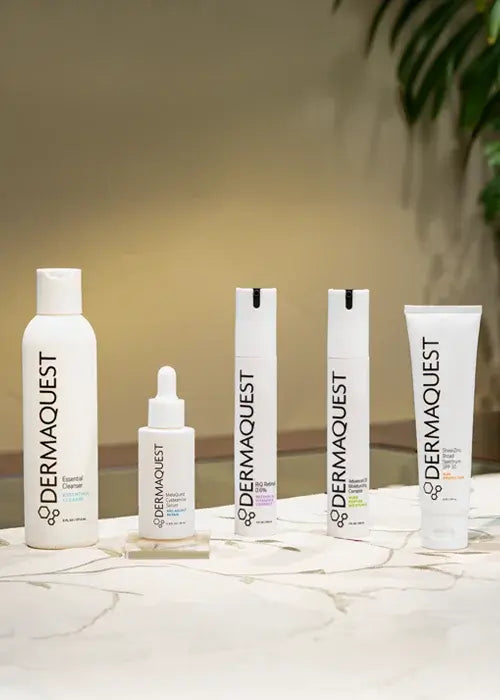
This is where DermaQuest's barrier-first philosophy applies directly. The DermaQuest Skin Health System™ establishes barrier health as the prerequisite for any targeted treatment—and for sensitive skin clients, that sequence is what makes resurfacing possible in the first place.
Frequency and Timing
Once weekly is a reasonable starting point for most sensitive skin clients, particularly when beginning a new protocol.
For clients currently using retinoids, discontinue 3–5 days before any professional resurfacing treatment; for sensitive skin types, a longer period may be warranted based on skin readiness at consultation.
Sequencing the Treatment
A well-structured sensitive-skin resurfacing protocol looks like this:
- Before treatment: Confirm the barrier is stable. Clients showing active irritation or new reactivity are not candidates for chemical exfoliation through resurfacers or chemical peels at that visit. Reinforce the barrier first and reassess at a later time.
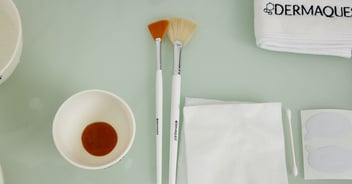
- During treatment: Use a resurfacer formulated for sensitive skin. The Lactic Acid Resurfacer, DermaQuest's dedicated sensitive skin resurfacer, combines Lactic Acid 30%, Mandelic Acid, and Niacinamide to resurface while supporting barrier integrity.
- After treatment: Follow with a barrier-supportive serum to reinforce repair. The Advanced Stem Cell Rebuilding Complex contains Gotu Kola Extract, Moss CellTec, and Edelweiss Plant Stem Cell to support the skin's natural repair processes post-resurfacing.
- At home: Reinforce daily with a protective moisturizer. The Delicate Essential Moisturizer uses Argan Oil, Botaniceutical BR1, and Jojoba Seed Oil to hydrate and protect between appointments.
Products Mentioned in Blog

Lactic Acid Resurfacer 4oz
This lactic acid resurfacer safely and efficiently exfoliates skin while simultaneously providing hydration. A natural skin brightening agent, this peel helps provide visible improvements in the signs of skin discoloration. Skin is hydrated, smooth, and radiant.Frequently Asked Questions
Ready to build confident sensitive skin protocols backed by professional-grade education and support? Contact the DermaQuest Team to learn how the DermaQuest Skin Health System™ can elevate your clinical outcomes and differentiate your practice.