

You've got a routine. You exfoliate a couple of times a week, your skin generally feels smoother afterward, and you're doing what you're supposed to do. But something still feels off. Maybe your tone isn't quite even, a rough texture persists, or your skin bounces back too slowly after breakouts一no matter how consistently you exfoliate.
The gap between a good at-home routine and truly healthy skin often comes down to this: At-home exfoliation and professional exfoliation aren't interchangeable. They work at different depths, serve different purposes, and when used together, produce results that neither can achieve alone.
Here's what you need to know about how each approach works, and how to use both to your skin's full advantage.
What At-Home Exfoliation Does
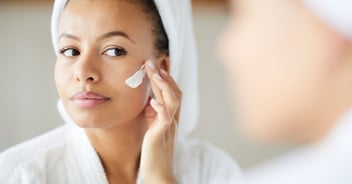
At-home exfoliation works primarily at the skin's surface, clearing away dead cells to support your skin's natural renewal cycle. Done consistently and correctly, it improves texture, enables products to absorb more effectively, and keeps pores from becoming congested. There are three main types of at-home exfoliants: chemical, physical, and enzymatic.
Chemical Exfoliants for at-Home Use
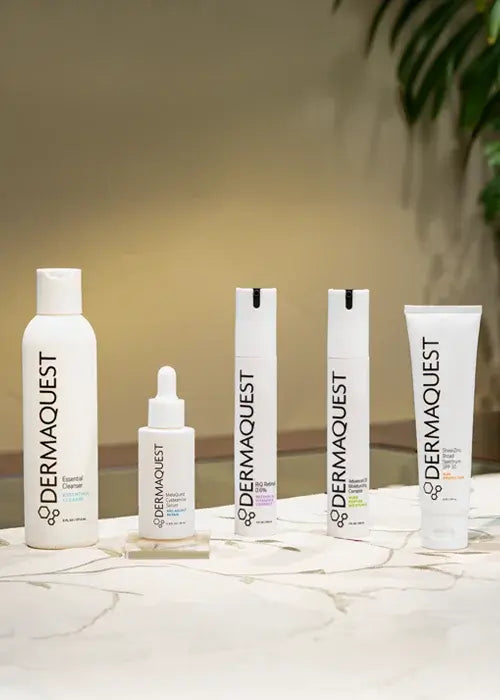
Chemical exfoliants, primarily alpha hydroxy acids (AHAs) such as glycolic and lactic acid, and beta hydroxy acids (BHAs) like salicylic acid, loosen the bonds between dead skin cells so they shed more easily. AHAs work on the surface and suit dull, dry, or uneven skin well. For an AHA option that works within your daily routine, the Glyco Resurfacing Cleanser integrates glycolic exfoliation without requiring a dedicated treatment step.
BHAs are oil-soluble, penetrate pores, and are a stronger option for congestion-prone skin.
Products Mentioned in Blog

Glyco Resurfacing Cleanser

Mini Pumpkin Mask
Physical Exfoliants and Enzymatic Options
Physical exfoliants work through manual friction. Used appropriately, they can smooth surface texture. But overly abrasive formulas or daily use can disrupt the barrier rather than support it.
Enzymatic exfoliation offers a gentler alternative. Fruit-derived enzymes, like those in the Mini Pumpkin Mask, gently digest the proteins holding dead skin cells together, a well-suited option for sensitive or reactive skin.
How Often to Exfoliate at Home, and When to Hold Back
Once weekly is a reasonable starting point for most skin types, though the right frequency ultimately depends on your skin type, the exfoliant you're using, and how your skin responds.
The American Academy of Dermatology advises calibrating both frequency and method to your skin type, and cautions that going too far can result in redness and irritation.
Frequency alone doesn't tell the whole story, either. Layering multiple exfoliating actives can compound the effect in ways that can quickly become harmful. Signs you've crossed that line include persistent redness, stinging from products that previously felt comfortable, or skin that feels raw rather than refreshed. If you recognize these, your skin barrier may already be compromised, and pausing all exfoliation is the right call.
What Professional Exfoliation Does Differently
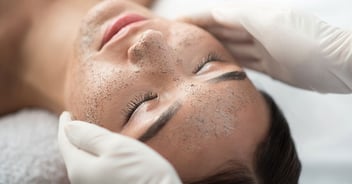
Professional exfoliation isn't simply a stronger version of what you do at home. It operates differently in the type of actives used, the depth at which they work, and the expertise applied before and during treatment.
Deeper Action, Greater Precision
Professional-grade resurfacers are formulated at concentrations and pH levels not appropriate for unsupervised at-home use. Clinical literature indicates that peel penetration increases with acid strength, pH, contact time, and application technique— which is why professional chemical peels can be formulated and administered to reach the papillary dermis or deeper.
That range of depth enables professionals to target concerns beyond the reach of surface exfoliation: deeper discoloration, pronounced textural irregularities, fine lines, and congestion accumulated over time.
Products Mentioned in Blog

Primary Pumpkin Resurfacer

MelaQuest Mango Resurfacer
How Professionals Assess Your Skin Before Exfoliating
A trained professional evaluates your skin before selecting any resurfacing approach, looking at skin type, Fitzpatrick classification, current barrier health, and treatment history. That assessment determines which exfoliant is appropriate, at what concentration, and whether your skin is ready for treatment at all. If your barrier is compromised, the right answer may be to strengthen it first.
Professional Resurfacing Treatments: What to Expect
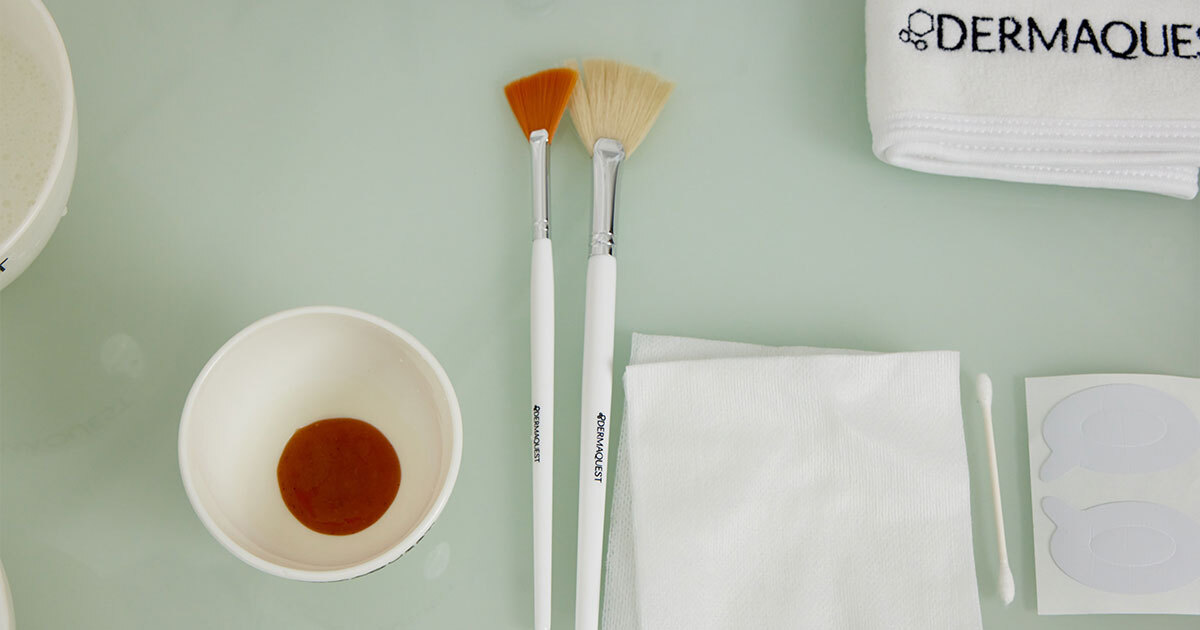
DermaQuest's professional resurfacing options are designed for individually tailored results across all skin types and concerns. The Primary Pumpkin Resurfacer is a smoothing and brightening treatment formulated to support collagen, even skin tone, and minimize the appearance of fine lines and wrinkles.
For skin with discoloration concerns, the MelaQuest Mango Resurfacer offers a brightening-focused protocol targeting uneven tone. Both are treatment-room products, available exclusively through DermaQuest-affiliated professionals as part of a personalized protocol.
At-Home vs. Professional Exfoliation:
A Side-by-Side Look
|
At-Home Exfoliation |
Professional Exfoliation |
|
|
Primary purpose |
Maintenance, surface cell turnover |
Targeted correction, deeper resurfacing |
|
Depth |
Surface layers |
Deeper skin layers depending on treatment |
|
Formulation strength |
Consumer-safe concentrations |
Clinical-grade, professionally calibrated |
|
Who applies it |
You |
A trained skin health professional |
|
Frequency |
Once weekly to start, subject to tolerance |
Based on skin assessment; typically spaced weeks apart |
|
Best for |
Daily or weekly skin maintenance |
Addressing persistent concerns, boosting results |
Why Your Skin Benefits From Both, and How to Protect Your Barrier
At-home exfoliation keeps things moving between appointments. Professional exfoliation initiates changes at a deeper level, stimulating cell renewal and addressing accumulated damage that maintenance exfoliation alone cannot resolve. Neither is more important than the other; they serve genuinely different functions.
Consider Your Skin Barrier First
What they share is a prerequisite: a healthy skin barrier. Exfoliation is only beneficial when your skin can support it. Over-exfoliation is one of the most common causes of barrier breakdown, and signs of over-exfoliation like persistent redness, stinging, and increased sensitivity signal that the barrier needs recovery, not more resurfacing.
This is where DermaQuest's barrier-first approach shapes every professional treatment. Before recommending any resurfacing protocol, a DermaQuest professional evaluates barrier health as an essential first step. The DermaQuest Skin Health System™ is built on this principle: stronger skin means better results.
For a full look at how that approach works from clinic to home care, The DermaQuest Skin Health System™: A Complete Approach to Lasting Transformation is a useful starting point.
Frequently Asked Questions
Getting the most from both at-home and professional exfoliation starts with the right guidance. Find a DermaQuest skincare professional near you to build a routine that works for your skin.